
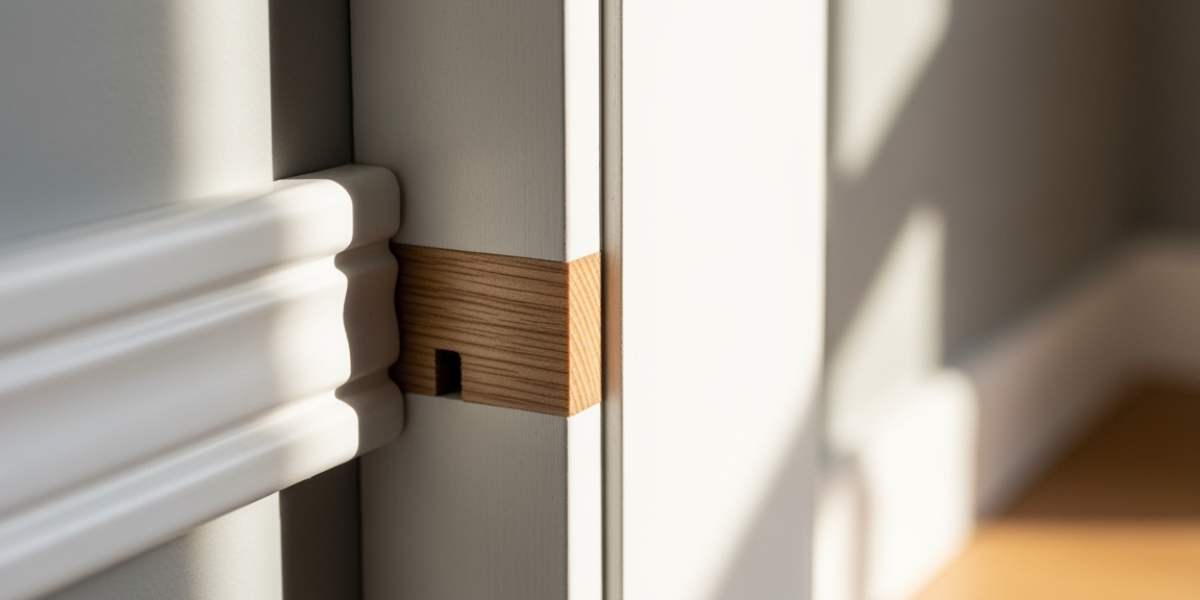
Walk into a room and most people notice the big stuff first: the floor, the wall color, the kitchen island, the windows. What they feel, though, often comes from the smaller details. The door that closes with a clean, quiet fit. The baseboards that meet at sharp corners instead of awkward gaps. The cabinet trim that looks intentional, not patched together. That is finishing carpentry.
It tends to get lumped into “the last step,” which makes it sound cosmetic. I think that undersells it. Finishing carpentry is where a space starts feeling complete, usable, and well made. When it is done well, people may not even comment on it. They just think the room feels right. When it is done poorly, they notice almost immediately, even if they cannot explain why.
If you are planning a renovation, fixing visible defects, or trying to understand where your budget matters most, professional finishing carpentry deserves more attention than it usually gets.
What finishing carpentry actually includes
Finishing carpentry is the detailed woodwork and trim installation that happens after the main structural work is done. It covers the parts of a room you see and touch every day.
That usually includes:
- Baseboards and shoe molding
- Door and window casing
- Crown molding
- Interior doors and jamb adjustments
- Cabinet trim and filler panels
- Built-ins and shelving details
- Wainscoting, paneling, and decorative trim
- Stair trim, handrails, and finish details
- Small millwork repairs and alignment work
This is different from rough carpentry, which deals with framing and structure hidden behind drywall. Rough carpentry can be a little forgiving because it gets covered. Finish work is the opposite. Every cut, every joint, every reveal is visible.
That alone changes the standard.
The difference between “installed” and “finished”
A lot of woodwork can be installed and still not feel finished. That gap matters.
A baseboard can be attached to a wall, but if the wall bows slightly and the trim was not scribed or adjusted, you get a shadow line and a gap that catches the eye. A cabinet crown can be nailed in place, but if corners are uneven and seams are not tight, the whole kitchen can look off. A door can technically close, but if it rubs, rattles, or sticks in humid weather, it is not really done.
Professional finishing carpentry lives in that gap between “it’s there” and “it’s right.”
That usually means more measuring than people expect, more fitting, more checking, more small corrections. It is patient work. Honestly, it can be a little fussy. That fussiness is the point.
Why precision matters so much
Most rooms are less square and level than they appear. Floors slope. Walls wave. Corners are rarely perfect 90s. Wood expands and contracts with humidity. Materials from different suppliers do not always match exactly. Finishing carpentry has to make all of that look intentional.
This is one reason skilled finish carpenters are so valuable. They are not just cutting trim to a number on a tape measure. They are reading the room.
A professional knows when to cope an inside corner instead of forcing a miter. They know how to hide a transition so your eye skips over it. They understand reveals, spacing, alignment, and proportion. They know when a wall needs to be shimmed, when a cabinet needs to be adjusted, and when a piece should be remade instead of “made to work.”
That level of judgment is hard to fake.
Better appearance is obvious, but function matters too
People often treat finish work as decoration. Some of it is decorative, sure. But a lot of it is practical in ways that are easy to miss.
A properly fitted door helps with privacy, noise control, and daily ease of use. Well-installed casing protects edges around openings that get bumped and cleaned constantly. Correctly aligned cabinet components prevent rubbing, sagging, and premature wear. Trim installed with the right materials and fastening methods stays put instead of separating from the wall six months later.
This stuff gets handled, kicked, leaned on, wiped down, and lived with. It is not static.
When finish work is off, the problems keep showing up in small annoying ways:
- Doors that won’t latch smoothly
- Drawers or panels that look crooked
- Gaps that collect dust
- Trim joints that open over time
- Uneven transitions between materials
- Loose pieces that shift or squeak
None of these issues sound dramatic on their own. Together, they make a home feel unfinished and harder to maintain.
Professional work can save money, even when it costs more upfront
I know this sounds like the usual argument people make for hiring skilled trades. Sometimes it is overstated. But with finishing carpentry, the math often checks out.
Why? Because errors are visible and expensive to revisit.
A bad paint job can sometimes hide minor trim flaws, but not for long. Caulk cracks. Seasonal movement reveals gaps. Misaligned cabinet details stay misaligned. If one trade rushes through finish work, the next trade often loses time trying to compensate for it, or ends up making the result look worse.
Then there is material waste. Trim profiles, prefinished panels, cabinet skins, and matching millwork pieces are not always easy to replace. One wrong cut on a specialty piece is not a small mistake. It can delay the project and add sourcing headaches.
Professional finish carpenters reduce that risk because they know where the tolerances are tight and where there is room to adapt.
That does not mean every small project requires a high-end custom shop. It means the visible, final layer of a room is a bad place to gamble on guesswork.
The hidden skill behind clean-looking woodwork
Good finishing carpentry looks simple. That is deceptive.
To get that clean result, a carpenter needs a mix of technical skill and visual judgment. Measuring matters, but so do sequencing, moisture awareness, fastener choice, blade selection, surface prep, and finish compatibility. Even the order of installation changes the outcome.
Take a simple example: baseboards in an older room.
On paper, it sounds easy. Cut the boards. Nail them up. Caulk and paint. In reality, the carpenter may need to account for floors that dip, plaster that bulges, corners that are not square, and walls that move enough to open joints seasonally. A professional might change where the seam falls, adjust the cut style, back-bevel an edge, or shave material so the trim sits tighter.
Those small choices are why one room looks sharp and another looks like a weekend project.
And to be fair, some weekend projects are fine. If you are trimming out a utility room and you do not mind visible imperfections, that may be a reasonable place to learn. But in main living areas, kitchens, entryways, and anywhere custom millwork is involved, small flaws get amplified.
Cabinets and millwork are especially unforgiving
Cabinet and millwork finish work deserves its own section because it is where precision becomes brutally obvious.
Cabinetry creates strong lines. So do panel details, fillers, valances, end panels, and crown transitions. If those lines are off, the whole composition looks wrong. A filler strip that is slightly uneven can make a cabinet bank feel crooked, even if the boxes themselves are level. A poorly scribed end panel can leave a visible taper against the wall. Misaligned trim near a range hood or pantry cabinet pulls attention right to the problem.
This is where professional finishing carpentry really earns its keep. Skilled installers know how to tune these details so the finished assembly reads as one system, not a pile of separate parts.
That includes things like:
- Keeping reveals consistent
- Making trim profiles die into adjacent surfaces cleanly
- Hiding out-of-plumb conditions
- Aligning cabinet faces, doors, and decorative details
- Repairing chips, dents, or mismatched seams without making them more obvious
The same applies to built-ins, mudroom storage, fireplace surrounds, and other architectural woodwork. These pieces usually live in high-visibility areas. People look straight at them. There is nowhere to hide sloppy work.
Poor finishing carpentry has a way of spreading
One bad trim detail rarely stays isolated. It tends to affect the rest of the room.
A door casing installed out of alignment can make the baseboard transition awkward. A cabinet panel set proud of the adjacent trim can throw off the countertop visual line. Crown molding with uneven spring angles can force ugly filler, extra caulk, or paint fixes that still read as mistakes.
I have seen rooms where the rough work was solid, the materials were decent, and the budget was healthy, but the final impression still felt disappointing because the finish details were rushed. People usually blame the room itself. Often, the room is not the problem. The ending was.
And finish work is the ending. It is the part your eyes keep checking.
When professional finishing carpentry makes the biggest difference
There are a few situations where hiring a pro is especially worth it.
Older homes
Older houses are charming until you try to make straight trim fit wavy walls and settled floors. That is skilled work. Matching old profiles can also be tricky, and repairs need a softer touch if you want them to blend instead of looking brand new in the wrong way.
Custom cabinetry or built-ins
Once you move beyond stock components, the margin for error gets smaller. Custom work asks for careful fitting and detail matching.
High-traffic rooms
Kitchens, entryways, hallways, and family spaces get used hard. Finish details in those areas need to look good and hold up.
Visible repairs
Repair work can be harder than new installation. Making a patch disappear takes restraint and precision. It is easy to overwork it and create a bigger visual problem.
Homes being prepared for sale
People notice finish quality during showings, even if they do not name it directly. Clean trim lines and well-fitted doors quietly communicate care.
What to look for when evaluating finish work
You do not need trade experience to judge the basics. A few simple checks tell you a lot.
Look at joints first. Are corners tight? Do seams feel intentional or forced? Then check alignment. Are reveals around doors and trim consistent? Do cabinet details line up from one section to the next?
Next, pay attention to transitions. Good finish work handles change well: wall to casing, cabinet to wall, trim to floor, one profile to another. Sloppy work often breaks down right at those meeting points.
Run your eye along long trim runs. Do they sit flat? Do they rise and fall awkwardly? Open and close doors. Do they swing cleanly and latch without resistance? Step back and look at the room as a whole. Does the trim guide your eye calmly, or do certain spots keep pulling your attention?
That last reaction matters more than people think. If your eye keeps snagging on a detail, something is probably off.
How professionals approach the job differently
A professional finish carpenter usually works differently long before the first cut.
They check the room. They look for moisture issues, movement, substrate problems, and anything that will affect the fit. They think about the order of operations so finished pieces are not damaged by the next step. They choose materials based on room conditions and expected wear, not just appearance. They plan for movement where movement will happen.
They also know that “close enough” is not one universal standard. The acceptable tolerance for painted baseboard in a closet is not the same as the standard for stained casing at eye level in a front entry. That judgment is part of the craft.
The best finish carpenters I have seen are picky in a useful way. They notice things early, before the room locks in around a mistake.
A quick word on DIY
DIY finishing carpentry is not doomed. Plenty of people learn it well, and some are excellent at it. If you are patient, have the right tools, and can accept a learning curve, smaller projects can be satisfying.
Still, it helps to be honest about what you are taking on.
Finish work is less forgiving than it looks, especially when profiles need to match, cabinets need tuning, or defects need to disappear rather than just get covered. The challenge is not only cutting material. It is seeing what “right” looks like before the piece is installed.
If you do go the DIY route, start somewhere low-risk. Test joints on scrap. Practice coping. Check moisture and acclimation. Dry fit everything. And do not assume caulk will rescue poor joinery. It will not. It usually just advertises it in a softer color.
The long-term payoff
Professional finishing carpentry is one of those investments that keeps paying back quietly. The room feels sharper. Daily use gets easier. Cleaning is simpler. Repairs happen less often. The house ages better because the visible details were handled with care at the start.
That payoff is partly visual, yes. But it is also practical. Good finish work holds the room together.
And maybe that is the simplest way to put it. Finishing carpentry is not just the decorative edge of construction. It is the part that turns raw building into lived space. When done by a skilled professional, it makes the difference between a room that merely functions and one that feels complete.